
Installing Acrylic Shower Lining Over Seratone Linings
A customer asked whether a new acrylic shower liner can be glued over old Seratone walls. It can, if the surface is prepared properly. Here is how, and what the alternatives are.
Installing Acrylic Shower Lining Over Seratone Linings
One way of freshening up an existing shower is to fit new shower linings to it. This has several benefits:
- It changes the look of the shower and gives it a modern, clean and hygienic finish.
- It updates the existing, sometimes dated, finish to a new look shower.
- It keeps the existing shower tray, normally a stainless steel tray, which is otherwise perfectly OK.
- Existing tapware and shower roses can be reused.
- A new white shower lining brightens up what could otherwise be a dark shower.
A customer recently contacted us with a question about refreshing their existing shower. They have a stainless steel shower tray with Seratone wall linings which need replacing.
“Can I glue a new acrylic shower lining over the top of an existing Seratone finish?”
An acrylic shower lining can be custom made to suit the size of your shower, up to 2 metres high and 3.6 metres long. We can even make them out of square if required. Existing linings often suffer from the bottom edges of the wall board rotting and crumbling away, which looks unsightly and risks water getting in behind the shower walls.
Gluing over the existing Seratone
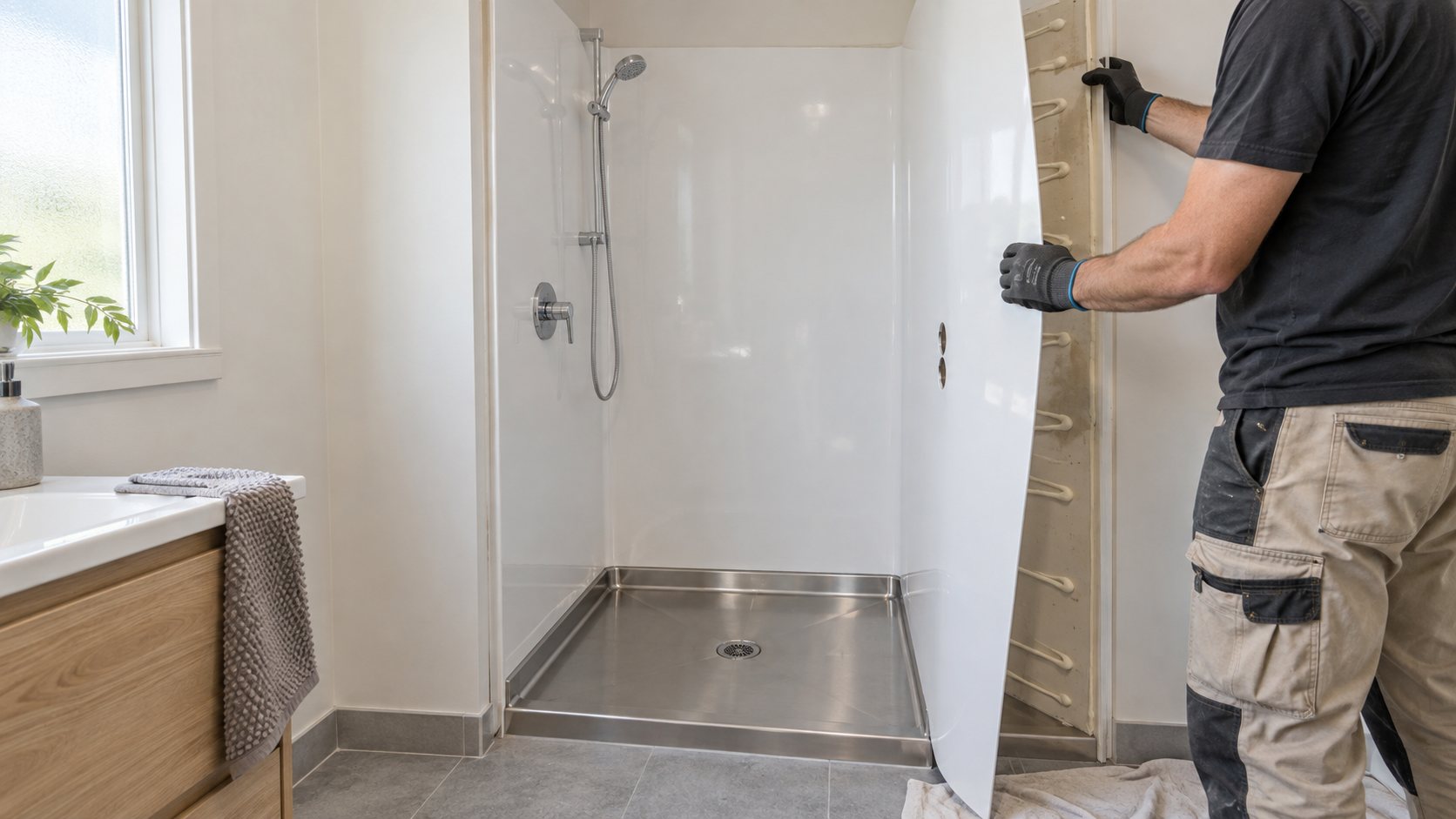
The best solution may be to simply glue a new acrylic liner over the top of the existing Seratone. Removing the existing liner means you will need to add a suitable lining, such as Gib board, to your wall studs to glue the new liner to.
Seratone, which is typically 4.75mm thick, makes an excellent surface for a new lining as long as it is prepared properly.
The modern adhesives used to glue acrylic linings onto Gib board use oxygen to activate the glue and provide the chemical adhesion needed. That is why manufacturers recommend new installations are not glued onto a painted or sealed Gib board surface. So, in order to prepare a sealed surface such as Seratone, the surface must be scuffed up or sanded to remove the gloss so that the glue can go off, or activate. The plastic jointers in the corner of the shower can remain in place, with the glue taking up the small difference in size.
When measuring for a new acrylic shower liner, simply measure from wall to wall inside the shower. The glue will take up any difference on the back wall.
Stripping out and starting again
The alternative to gluing an acrylic lining over the top of an existing shower lining is to strip out and completely redo the shower area.

Be aware that older stainless steel shower bases were 36 inches wide, which is 915mm. New acrylic shower trays and enclosures are 900mm wide, so there may be a need to pack out the existing walls to make the shower cubicle smaller to suit the new tray and enclosure.
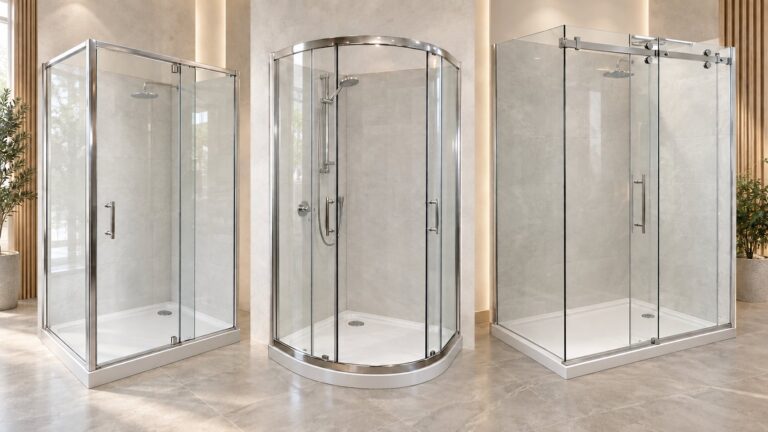
Complete new showers come in many different sizes, which you can view here.
Replacing the shower door if required
If your shower does not already have a shower door, you might like to invest in a new pivoting shower door, which is adjustable in width, available in a few different heights and easy to fit.
If your existing shower door needs attention in the form of new rollers or guides, you will find them at showerdoorparts.co.nz.
Adding a Steam Stopper
To complete the makeover, you might want to consider a Steam Stopper for over the top of the shower. A Steam Stopper will:
- Stop steam in your bathroom.
- Keep the shower warmer while you are in it.
- Save on the cost of heating your water.
- Reduce the need to repaint your bathroom so often.
For any technical questions about your own shower, send us your measurements and a photo and we will tell you what fits.
Get In Touch
Specialised technical enquiry? Email your requirements with any supporting photos of your dream outcome.